
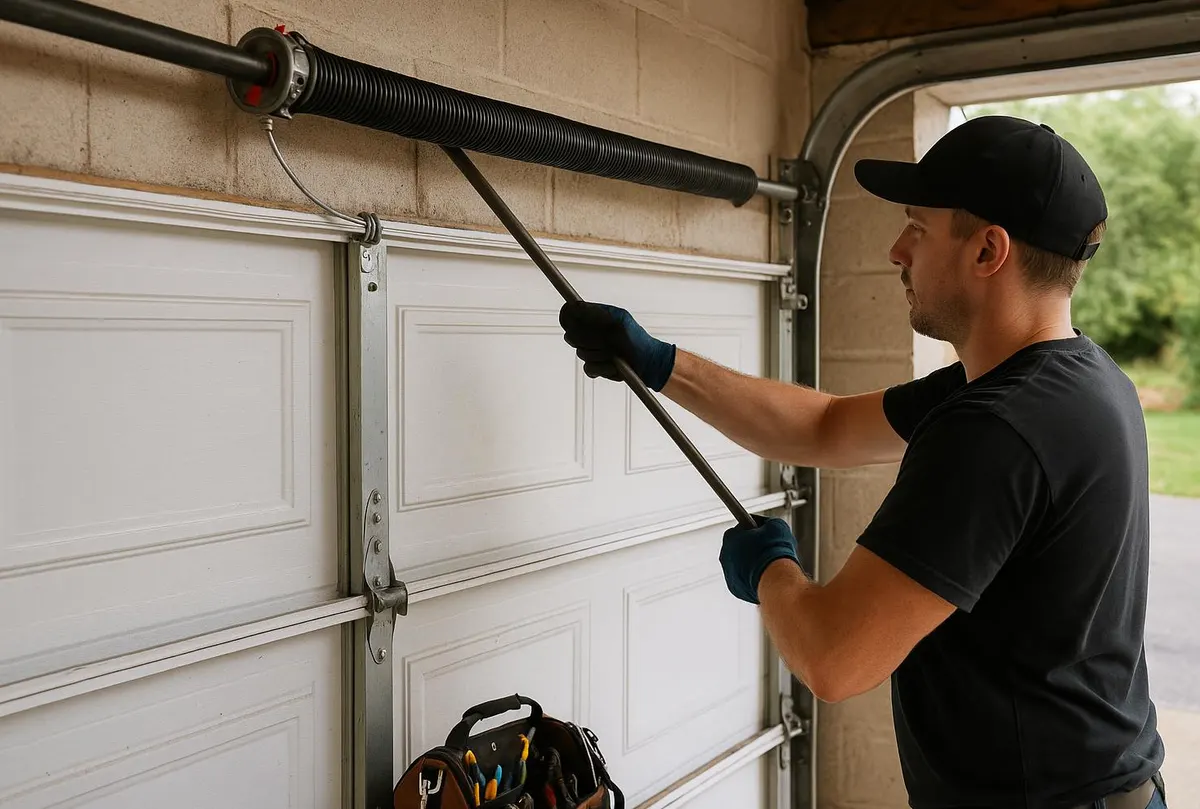
What We Find on Most Lubrication Calls
When a technician in this area gets called out for a "noisy garage door," the cause is almost always the same: dried-out hardware, rust forming on springs and hinges from months of humidity, and tracks caked with the fine dust that blows in ahead of afternoon storms. A lot of homeowners have already tried to fix it themselves with a can of WD-40 pulled from the garage shelf, which usually makes things worse. WD-40 is a solvent and moisture displacer, not a true lubricant — it washes out old grease, attracts dust, and leaves hinges drier than before within a few weeks. In a climate this humid, that cycle of drying out and rusting happens faster than homeowners expect.
Tools You'll Need
- Silicone-based garage door lubricant or a lithium grease made for garage doors (sold in most hardware stores)
- A clean microfiber cloth or shop rag
- A soft brush or old toothbrush for tight spots
- Step stool or short ladder
- Work gloves
Step-by-Step: Lubricating Your Garage Door
- Close the door and disconnect the opener. Pull the manual release cord so the door won't move unexpectedly while you're working near the springs and track.
- Wipe down the tracks first. Use a dry rag to remove dust, pollen, and the grit that builds up from humid air and storm runoff. Don't lubricate the tracks themselves — rollers need clean, dry metal to grip, and oil on the track actually causes slipping.
- Lubricate the hinges. Apply a light coat of silicone or lithium spray to each hinge where the panels meet, working it into the pivot point.
- Lubricate the rollers. Spray the bearings at the center of each roller, not the wheel surface. If your rollers are the older metal-and-ball-bearing type, they'll need this every few months; nylon rollers need less frequent attention.
- Coat the springs lightly. A thin film of lubricant on the torsion spring helps prevent the rust that humid air causes, but don't saturate it — excess lubricant just drips onto the floor and attracts dirt.
- Lubricate the locks and the opener's chain or screw rail. A small amount goes a long way here too.
- Wipe off excess. Any lubricant left sitting on the surface will collect dust and grime, which is often what causes that gritty, grinding sound a few weeks after a DIY job.
- Reconnect the opener and test the door. Run it up and down a couple of times to work the lubricant into the moving parts, listening for any remaining squeaks or catches.
Products to Use — and What to Avoid
- Use: Silicone-based garage door lubricant or white lithium grease, both sold specifically for garage door hardware.
- Avoid: WD-40 or other household penetrating oils as a long-term lubricant — fine for loosening a stuck bolt, not for ongoing maintenance.
- Avoid: Grease guns or heavy automotive grease, which are too thick for the rollers and hinges and will gum up with dust.
- Avoid: Cooking oils or household lubricants as a substitute — they break down fast in heat and humidity and leave residue.
What's Safe for a Homeowner vs. What Needs a Technician
Wiping down tracks, lubricating hinges, rollers, and springs, and testing the door afterward are all reasonable DIY tasks with the door disconnected from power and the opener released. But if you notice a spring that looks stretched, bent, or rusted through, if a cable looks frayed, or if the door is off its track, stop there. Springs are under heavy tension and off-track doors can shift unpredictably — both are jobs for a trained technician, not a lubrication fix.
When to Call Paisley Overhead Door Co
If lubrication doesn't quiet the noise, if you spot rust that's gone past the surface, or if the door feels heavier or slower than it used to, it's time for a second look. We offer Cable & Roller Replacement for worn hardware that's past saving with lubricant alone, and Preventive Maintenance & Tune-Ups to catch rust, spring wear, and track misalignment before hurricane season puts extra strain on the door. Call Paisley Overhead Door Co today to schedule a tune-up for your Paisley, FL garage door before storm season tests it.